
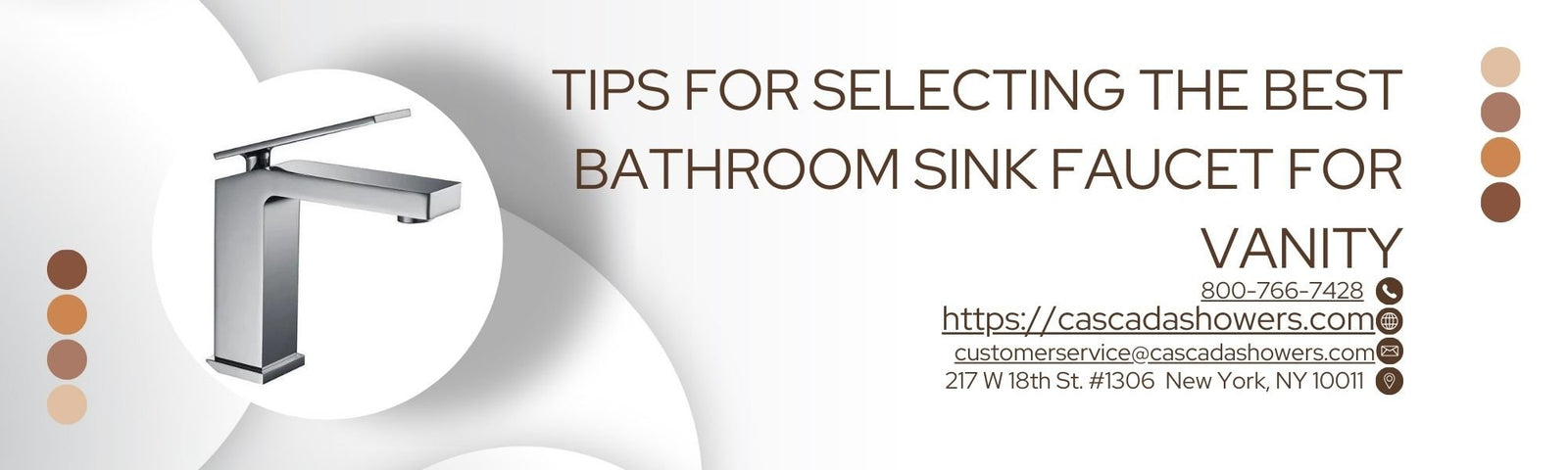
Picking a bathroom sink faucet is one of those decisions that feels small until you're the one dealing with a faucet that doesn't fit your sink's holes, spills water past the basin, or just looks wrong against everything else in the room. It's a small fixture that gets touched multiple times a day by everyone in the house, so it's worth getting right the first time rather than treating it as an afterthought once the vanity's already picked out.
At Cascada Showers, the way we think about this is simple: a good faucet has to look right and function right. One without the other is half a decision. Here's what actually matters when you're choosing.

Start With Your Vanity: The Faucet Types
The faucet types below aren't really a style preference first — they're determined by how your sink or vanity is already drilled. Figure that out before you fall in love with a look that won't physically fit.
Centerset Faucets
Built for a three-hole vanity where the handles and spout are joined into a single compact unit. If your countertop space is tight, this is usually your most practical option — it takes up less room without looking cramped.
Widespread Faucets
These separate the hot handle, cold handle, and spout into three independent pieces, installed at whatever spacing your vanity allows. They read as more upscale and give you more flexibility in layout, which is why they show up often in nicer bathroom designs.
Single-Handle Faucets
One handle, one hole, controlling both temperature and flow. Simple, clean-looking, and genuinely easy to use — a good fit if you'd rather not think about faucet mechanics at all.
Wall-Mounted Faucets
Mounted directly into the wall instead of the vanity surface, which frees up your entire countertop. This is the standard choice for a vessel sink, and it reads as more modern than anything mounted on the counter itself.
What Actually Determines Quality: Material and Finish
Material affects how long a faucet lasts far more than how it looks on day one. Solid brass is generally the most durable option — it resists corrosion well and holds up to years of daily use better than lighter-weight alternatives. Stainless steel and zinc alloy are reasonable options too, usually at a lower price point, though they don't always match brass for long-term durability.
Finish is where you match the faucet to the rest of your bathroom — chrome, brushed nickel, and matte black are the most common options, and picking one that matches your other fixtures (shower head, towel bars, cabinet hardware) does more for a room's cohesion than people expect.
Style Should Match the Room, Not Fight It
A detailed, traditional faucet looks right next to a vintage-style vanity. A sharp-edged, minimal faucet suits a modern one. The mismatch — an ornate faucet on a stripped-down modern vanity, or vice versa — is one of the more common ways a bathroom ends up looking unintentional rather than designed. The faucet should support the room's look, not compete with it.
Don't Skip the Measurements: Height and Spout Reach
This is the detail most people only think about after installation, when it's too late. The spout needs to sit high enough above the basin to avoid splashing, but centered enough that water actually lands in the middle of the sink rather than near the edge. For a vessel sink especially, measure the reach and height against your actual sink before buying — not just against the showroom display.
Check Your Holes Before You Shop
Count the pre-drilled holes in your vanity or sink before you pick a faucet type. A single hole only works with a single-handle faucet; three holes are what centerset and some widespread faucets need. Some vanities can be drilled to fit a different faucet, but that's an extra step and cost you'll want to know about upfront, not discover after your new faucet arrives and doesn't fit.
Water Efficiency Is Worth a Real Look
This is one area where a specific number actually exists, rather than vague "eco-friendly" language. A standard bathroom faucet is allowed to run up to 2.2 gallons per minute (gpm). A WaterSense-certified bathroom faucet is capped at 1.5 gpm — roughly a 30% cut in water use, verified through EPA testing rather than a marketing claim. Over time, that difference shows up on your water bill without requiring you to change how you actually use the sink.
Practical Advice Before You Buy
Think About Cleaning, Not Just Looks
A beautiful finish that shows every fingerprint and water spot turns into a daily annoyance fast. Finishes designed to resist smudging and water marks save you from constant wiping down, which matters more than it sounds like it would once you're living with it.
Match Your Other Fixtures
Keep the faucet's finish consistent with your shower system, towel bars, and cabinet hardware. This is one of the easiest ways to make a bathroom feel put-together rather than assembled piece by piece.
Set a Budget Before You Browse
Faucet prices swing widely based on material, brand, and features. A higher upfront cost on a well-made faucet is often the cheaper option long-term, since it means fewer repairs and a longer replacement cycle.
Decide Which Features Actually Matter to You
Touchless operation, precise temperature control, and built-in filtration are all available now, but they're worth paying for only if you'll actually use them daily. A touchless faucet is a genuinely good call in a household with kids, since it cuts down on both mess and germ transfer at the sink.
Common Mistakes to Avoid
- Ignoring your vanity's existing holes. Buying a faucet before counting holes is the single most common reason people end up returning one.
- Choosing looks over usability. A faucet that's hard for kids, older family members, or anyone with limited grip strength to operate isn't actually a good pick, however nice it looks in photos.
- Skipping the spout-reach measurement. Water spilling past the basin edge instead of landing in the sink is almost always a sign the spout reach wasn't checked against the actual sink size beforehand.
Frequently Asked Questions
What's the best material for a bathroom sink faucet?
Solid brass is generally the most durable, resisting corrosion and wear better than lighter alternatives. Stainless steel and zinc alloy are solid, more budget-friendly options, though they typically don't match brass for long-term durability.
How do I know what size faucet fits my vanity?
Measure the distance between your vanity's pre-drilled holes. That measurement tells you whether you need a centerset, widespread, or single-handle faucet, and it's worth checking alongside the spout's height and reach relative to your sink.
How much water do touchless faucets actually save?
Touchless faucets mainly save water by cutting out the water that runs while you're reaching for the handle or adjusting temperature manually. They cost more upfront, but the water savings and hygiene benefit — especially in households with kids — make them worth it for a lot of buyers.
How should I maintain a bathroom sink faucet?
Clean it regularly with mild soap and water, and skip abrasive cleaners or harsh chemicals that can dull or damage the finish over time. Regular cleaning is what actually prevents water spots and mineral buildup from building up on the surface.
Can I install a bathroom sink faucet myself?
If you've got basic plumbing experience and the right tools, yes — most centerset and single-handle faucets are a manageable DIY job. Wall-mounted installations involve more plumbing work and are usually worth leaving to a professional.
Final Thoughts
The right bathroom sink faucet comes down to three things lining up: it fits your vanity's existing holes, it matches the room's style instead of fighting it, and it's built from material that'll actually hold up to years of daily use. Get those three right, and the faucet becomes one of the better-value upgrades in the whole bathroom — a small fixture that quietly does its job well, every single day.
Browse Cascada's full range of bathroom fixtures and shower systems to find a finish that matches your new faucet, or see our indoor shower panel if you're updating more than just the sink.