
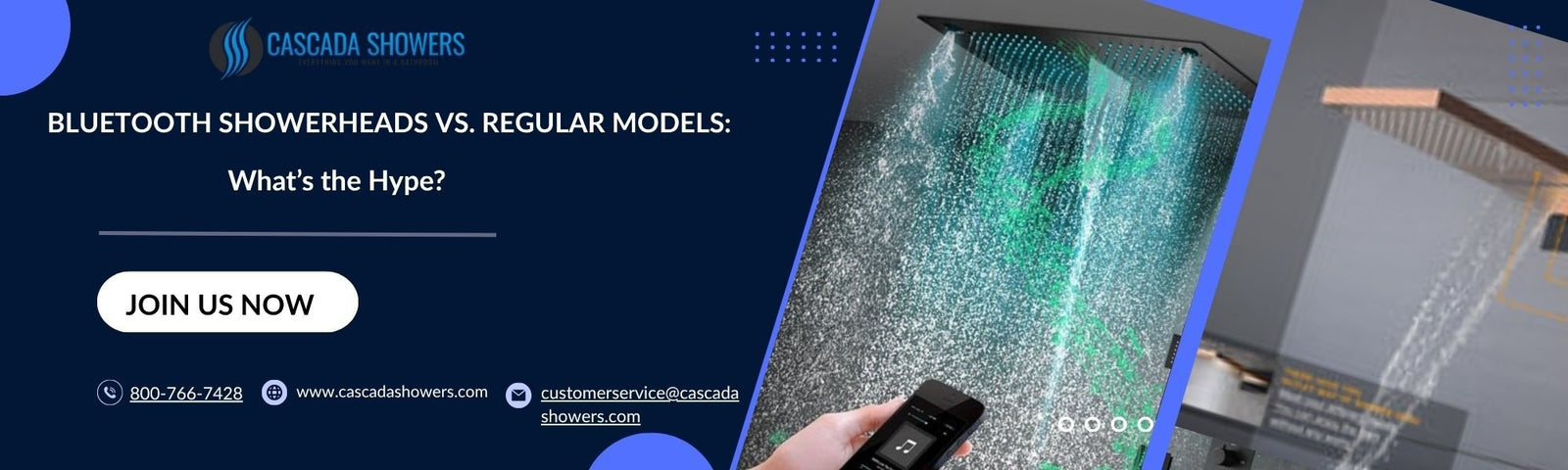
Bluetooth shower heads keep turning up in bathroom roundups, and it's fair to wonder whether they're a real upgrade or a gadget you'll stop using by February. Here's where I land: if you like music or a podcast while you get ready, a Bluetooth shower head is a nice daily touch. If you just want strong, steady water, a regular one does that job well and usually costs less.
The rest of this guide goes through how they work, what you give up, what to check before you buy, and who should pick which.
The Short Answer
A Bluetooth shower head is worth it if you'll use the speaker often and don't mind charging it. A regular shower head is the better buy if you care most about price, simplicity, and low upkeep. Both can give you a great shower. The Bluetooth version just adds sound, and with it a battery, a water-resistance rating to check, and one more part to look after.
So, What's the Hype?
Showering is the one routine almost everyone does every day, and it hardly ever changes. A Bluetooth shower head adds music, a podcast, or an audiobook without another gadget stuck to the wall. Some smart models go further, with temperature alerts or water-use readouts. It also fits a bigger trend of making small daily habits feel a bit more personal.
So the hype is real, because it makes a dull habit nicer. Whether it's justified depends on how you shower.
What Is a Bluetooth Shower Head?
It's a shower head with a wireless speaker built in. You pair the speaker with your phone or tablet, the same way you'd pair any Bluetooth speaker, then play whatever you like. Most don't need an app for basic use.
Designs differ, so details matter. Take Cascada's music shower heads as an example. The speaker runs on a rechargeable battery that you charge over USB between uses, and the LED lighting is powered separately by a water-driven turbine, so it doesn't drain the battery. The speaker is built into the head, so you check each listing to see what can be replaced. Models like the Lido 15"x23" Music LED Shower Head use standard 1/2-inch plumbing connections. Other makers do it differently, and some use removable speakers. So read the listing instead of assuming.
One more thing. A stand-alone Bluetooth shower speaker, the kind that hangs on the wall or sticks to the tile, is a different product with no link to your shower head. If you only want music, that might be enough.
Why Regular Shower Heads Still Make Sense
A regular shower head isn't outdated. For most bathrooms it's practical and dependable, and it gets some things right that a Bluetooth model can't match.
It costs less. Prices vary by brand and style, so I won't throw numbers around, but a standard head is usually cheaper than a Bluetooth one with the same finish. It's quick to install, since most screw onto a standard shower arm. There's nothing to charge, nothing to pair, and no app. And upkeep is basic: clear the mineral buildup so the nozzles don't clog.
Many standard heads also come with several spray settings, so you can change the flow without any extra tech. What you lose is the entertainment factor. A regular head won't feel as special as a rainfall or smart model, but it can still be a very good shower.
Where a Bluetooth Shower Head Shines
The appeal is easy to understand. Music or a podcast makes the shower feel less like a chore, especially on dark winter mornings. Your phone stays dry on the counter while the sound comes from the shower itself. There's less clutter, because the speaker is part of the head instead of another thing on the wall. And you decide what plays, straight from your phone.
Some models also pair the speaker with lighting or a rainfall spray, which turns the whole shower into more of an experience. If you spend a lot of time in there, that matters.
The Downsides to Think About
This is where Bluetooth models need a closer look.
Water Resistance
A speaker in a shower has to handle spray and steam. Look for an IP rating on the product. The "X" in IPX means the rating covers water only. IPX4 means it's protected against splashes. IPX5 means it handles jets of water from any direction. IPX7 means it survives being submerged up to one metre for 30 minutes. IPX5 is generally considered adequate for typical shower use, and IPX7 is more versatile.
There's a catch. Those ratings are tested with fresh water, so they don't tell you how soap, hot water, or heavy steam wear a seal over time. If a listing shows no rating at all, treat that as a warning sign and check with the seller.
Battery and Charging
Someone has to charge it. Battery life depends on the model and how loud you play it, so check the listing. Forget to charge it and you're stuck with a plain shower head until you do. Also look at how charging works. A simple USB port is easier to live with than one that's awkward to reach.
Repairs and Replacement
More parts means more that can go wrong. Find out whether the speaker can be replaced or is sealed into the head. If it's built in and the battery wears out, you may end up replacing the whole unit. A removable speaker is easier to swap or fix.
Connection and Compatibility
Bluetooth shower heads usually pair with Bluetooth-enabled phones, tablets, and computers. Range and extra features differ by model. Features like voice assistants or smart-home control aren't a given, so check what the listing actually says.
Cleaning
You still have a shower head, so mineral buildup is still your problem. A Bluetooth model adds a speaker area that needs gentle care. Follow the manufacturer's cleaning steps, and don't soak the speaker part unless they say it's safe.
How They Compare, Side by Side
Cost. Bluetooth models usually cost more because you're paying for the speaker and battery on top of the shower head. Whether that's worth it depends on how often you'd use the audio.
Installation. Most shower heads of both types thread onto a standard shower arm. A Bluetooth model adds a step: charging and pairing the speaker. Check the listing for connection size and any extra setup.
Water use. Neither type is automatically better. According to the EPA, standard shower heads use 2.5 gallons per minute, and WaterSense labeled ones use no more than 2.0. Always check the flow rating of whichever head you pick. If saving water matters, look for the WaterSense label on a Bluetooth model, or choose an efficient regular head.
Upkeep. A regular head needs descaling. A Bluetooth head needs descaling plus battery care and a quick look at the speaker area. It's not a big job, but it's more than a standard head asks for.
Experience. A regular head showers you. A Bluetooth head showers you with sound. If you never listen to anything in the bathroom, that extra is wasted.
Who Should Choose Which?
Go Bluetooth if you shower to music or podcasts, don't mind charging a speaker, and would rather have fewer gadgets around the bathroom. Go regular if you want the best value, minimal upkeep, or you mostly care about pressure and spray style.
Can't decide? A good regular head plus a small, separate waterproof speaker gives you most of the benefit, and you can replace each part on its own.
Questions to Ask Before You Buy
- What's the water-resistance rating, and does the maker state it?
- How long does a charge last, and how do I charge it?
- Can the speaker be removed or replaced?
- What's the flow rate, and is it WaterSense labeled?
- Does it fit my shower arm without extra parts?
- What spray settings does it offer?
Frequently Asked Questions
Are Bluetooth shower heads waterproof?
They're built for the shower, but check the rating. IPX4 covers splashes, IPX5 covers jets of water, and IPX7 covers temporary submersion. If a listing has no rating, ask before you buy.
How long does the battery last?
It depends on the model and the volume. Check the specs for the one you're considering, and look at how it recharges. Some models, like Cascada's music shower heads, charge over USB between uses.
Do Bluetooth shower heads work with any phone?
They generally pair with Bluetooth-enabled phones, tablets, and computers. Extra features like voice assistants vary by model, so confirm before assuming.
Do I need an electrician or special plumbing?
For battery-powered Bluetooth heads, no wiring is needed. They usually connect to standard plumbing like any other shower head, and you charge the speaker as needed. Models with wired lighting or panels are a different case and may need an electrician.
Do Bluetooth shower heads use more water?
Not by default. Water use depends on the head's flow rate. Standard heads run about 2.5 gallons per minute, and WaterSense labeled heads use no more than 2.0, according to the EPA.
Are Bluetooth shower heads worth it?
If you'd listen often and don't mind charging one, yes, for many people. If you rarely listen to anything in the shower, a good regular head is the smarter buy.
Final Thoughts
A Bluetooth shower head makes a daily routine a bit more fun. A regular one keeps things simple and cheaper. Neither is wrong, so pick the one that matches your habits. Check the water-resistance rating and battery details before you buy, and make sure the flow rate suits your water goals.
Want to look around? Browse Cascada's music shower systems and rain shower heads, or see the full shower systems collection. For more styles, read our guide to the top shower heads for a luxury bathroom upgrade, and if saving water is a priority, see our water-saving shower system guide.